

17 reported calls from Facebook ads
Case Study
Client Overview:
C.A.S.E. Flooring: Facebook Ads Case Study
Website: C.A.S.E. Discount Flooring of Fayetteville, https://casediscountflooringoffayetteville.com/, _blank
C.A.S.E. Discount Flooring of Fayetteville serves homeowners and contractors with flooring products and installation services in Fayetteville, North Carolina. This engagement focused exclusively on Facebook advertising, with placements across Facebook and Instagram. The campaign used native Call Now ads so people could contact the business directly.
The goal: generate phone inquiries and compare each audience’s cost per reported call over August 29–September 27, 2026.
Challenges:
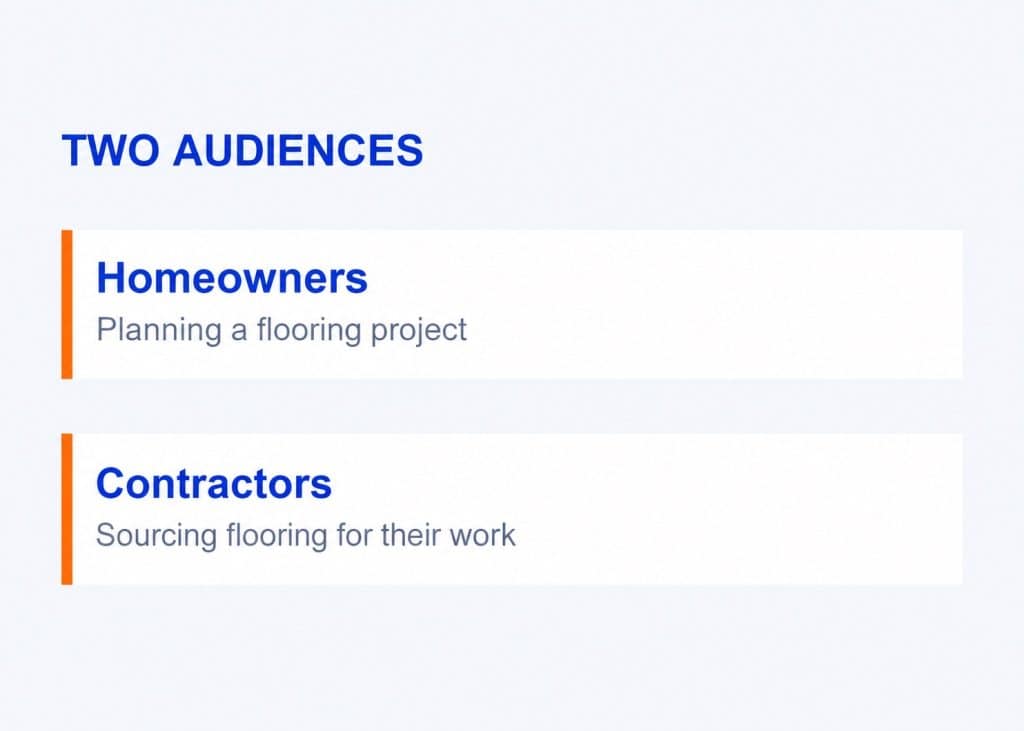
The campaign needed to reach two distinct audiences: homeowners planning flooring projects and contractors sourcing flooring for their work. Performance also needed careful interpretation: Meta records calls placed through its advertising system, which does not establish whether a call was answered, qualified, or converted into a sale.
Solutions Implemented:
Separate Call Now campaigns addressed homeowners and contractors. The report lists Facebook Feed, Reels and Marketplace alongside Instagram Feed, Reels and Stories placements. The native call action gave prospective customers a direct route to the business. Campaign results were reviewed by audience, with spend divided by reported calls to compare efficiency.
Results:
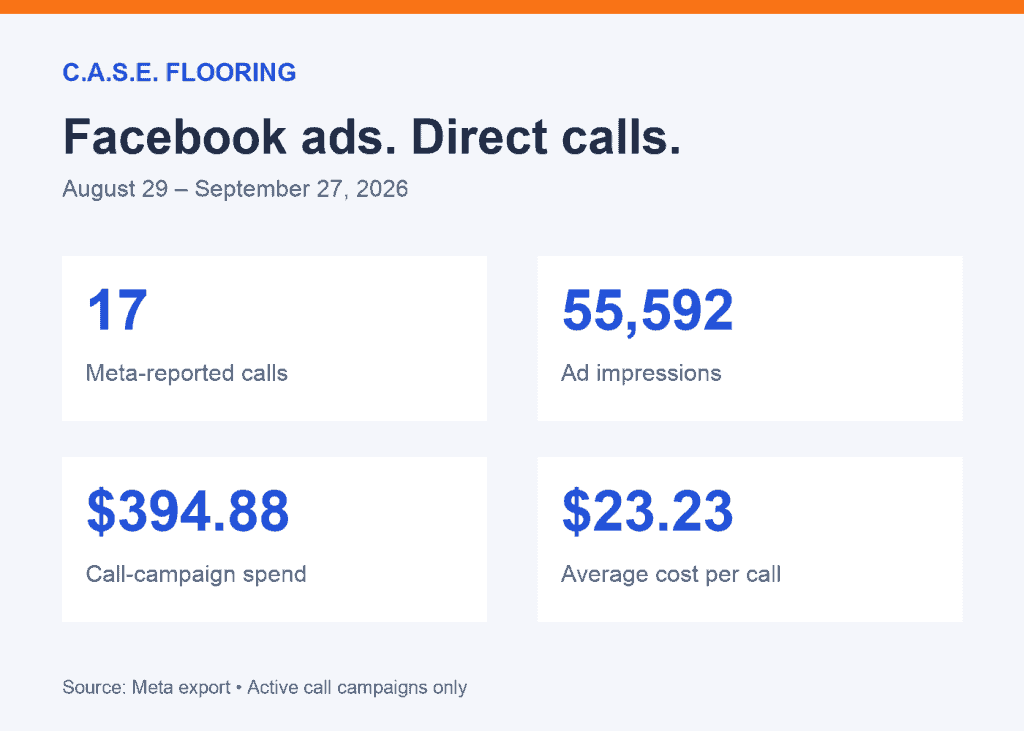
From August 29 to September 27, 2026, the two active call campaigns generated 17 Meta-reported calls and 55,592 impressions on $394.88 in ad spend—an average of $23.23 per reported call.
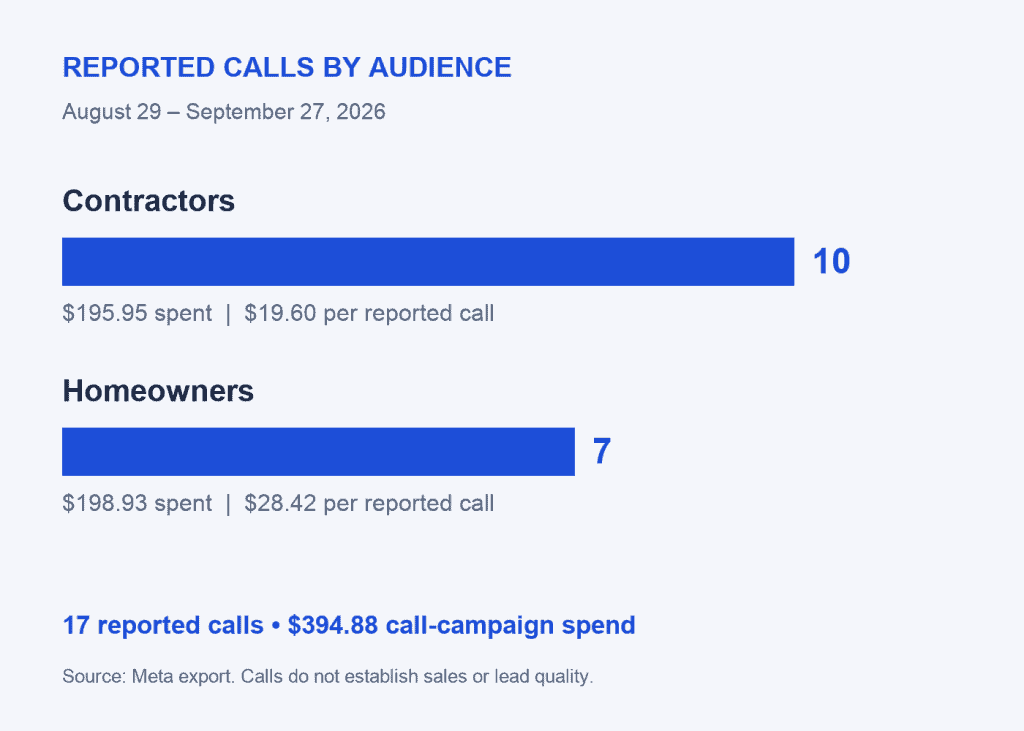
Contractors: 10 calls, $195.95 spent, $19.60 per call and 27,709 impressions.
Homeowners: 7 calls, $198.93 spent, $28.42 per call and 27,883 impressions.
The contractor campaign generated three more calls on slightly less spend. Its cost per reported call was approximately 31% lower than the homeowner campaign during this period.
Measurement note: Figures are calculated from the supplied Meta campaign export using rows marked active and the native calls-placed result. The full export includes another $128.53 from an inactive campaign, bringing all exported spend to $523.41. That inactive campaign is excluded from the call-campaign cost above. The PDF lists $393 for the call campaigns; this case study uses the export’s precise $394.88 total. Calls are platform-reported events, not verified sales or qualified leads.
Conclusion:
The campaign established a measurable baseline for generating phone inquiries through Facebook advertising. Both audiences produced reported calls, with contractors showing the lower cost per call in this 30-day period. These findings support continued audience testing and call-quality tracking before drawing conclusions about booked work, revenue or return on ad spend.